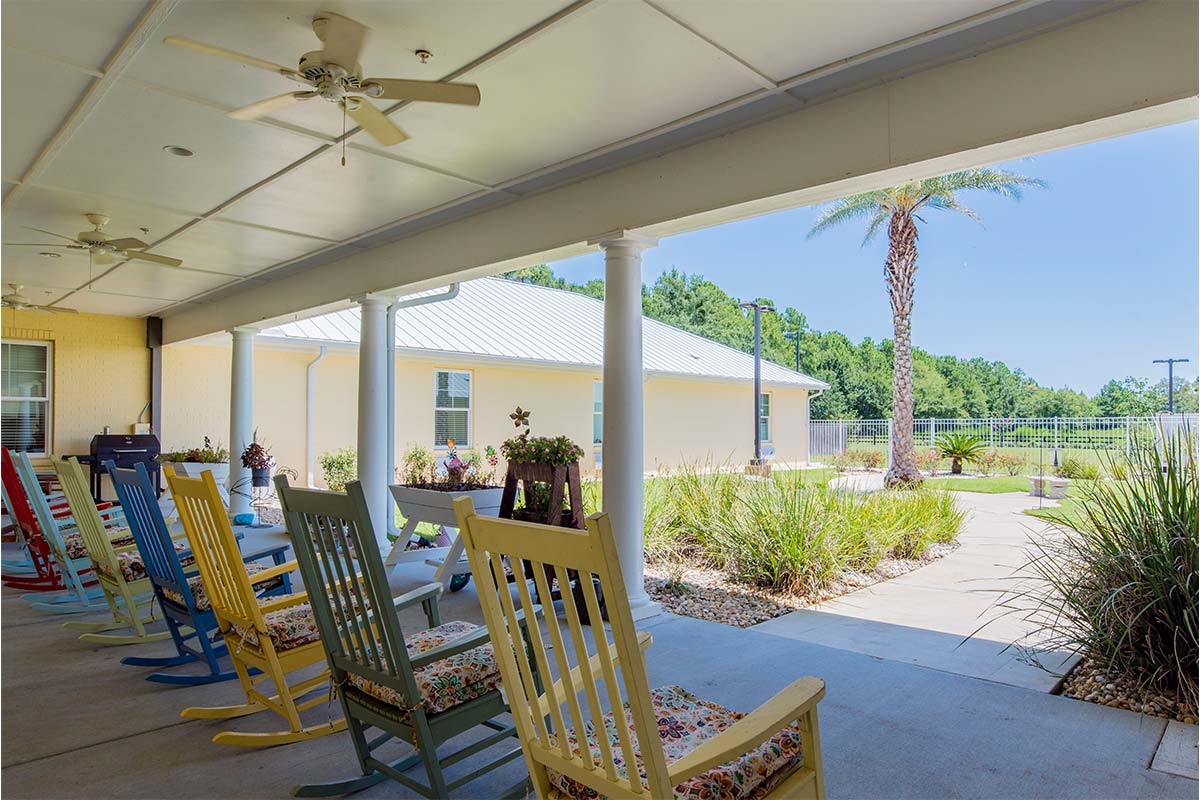
Searching for memory care Baldwin County? Options from Fairhope, Daphne, or Spanish Fort, Gulf Shores probably isn’t the first place that comes to mind. It’s not the closest option for most families in the area, and that’s a fair thing to notice.
But it’s also not the whole story. Families end up driving past communities in their own backyard to bring a parent to Haven Memory Care instead. Once you see what’s actually happening there, it’s easy to understand why.
The closest option and the right option aren’t always the same thing. That gap is where this decision lives.
A Region Facing the Same Question, Together
Here’s the most common question we get asked: Is the drive to Gulf Shores worth it? For a lot of families, the simple answer is yes, and it comes down to what’s waiting on the other end of it.
Haven isn’t the closest memory care community for many of our residents’ families. Still, they choose 30-to-45-minute drives down Highway 59 or across the bay. That’s real, and if you’re planning to visit a few times a week, it’s worth factoring in.
The good news? You’re far from the only one weighing this. More than 103,600 Alabamians are currently living with Alzheimer’s. Baldwin County’s growing retiree population means that number is only climbing locally. Which is all the more reason to compare communities carefully instead of just picking whichever one is closest.
The Trade-Off, Side by Side
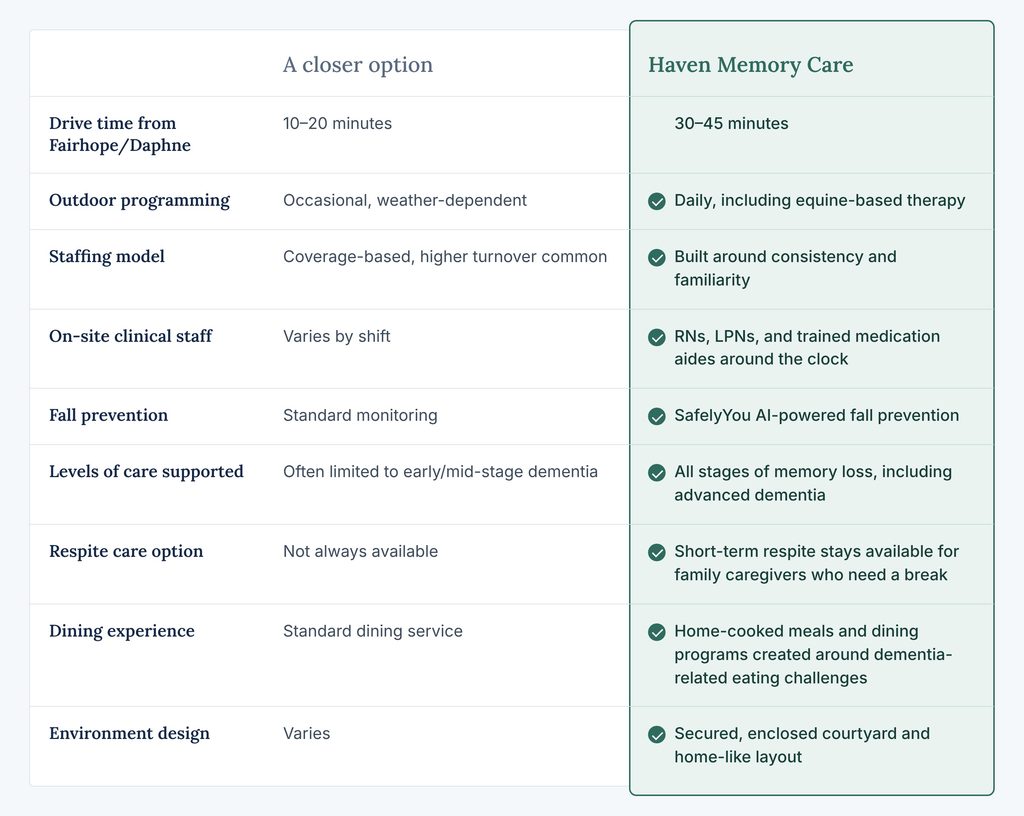
No two communities are identical, and this isn’t meant to describe every closer option out there; some may offer more than this table suggests. It’s meant as a starting point for the questions worth asking on any tour, regardless of which community you’re visiting.
What Sets Haven Memory Care Apart

A Real Connection to the Outdoors
Dementia care can get reduced to hallways, activity calendars, and medication schedules pretty fast. At Haven, outdoor time isn’t something that happens when the weather cooperates; it’s built into how residents spend their days. Fresh air, natural light, and a change of scenery help with mood and agitation for people living with Alzheimer’s and other forms of dementia, and our programming focuses on just that.
One of the more unique pieces of that programming involves horses. There’s something about the presence of a horse — the quiet, the weight of it, a hand resting on a mane — that can settle a resident who’s had a rough morning, or bring out a smile from one who’s been quiet all week. For families who’ve watched a parent grow withdrawn or anxious, seeing that kind of calm, easy engagement is the moment a community stops feeling like a “facility” and starts feeling like home.
Animal-assisted interventions in dementia care have found to increase social interaction, along with reduced agitation and aggression in most participants.
Staff Who Know the Residents
Ask anyone who’s toured multiple memory care communities what changed their mind and it’s rarely the building. It’s almost always the staff: whether caregivers seemed to really know the residents, or whether it felt like rotating faces and constant turnover.
At Haven, the staffing model is designed around consistency, not just coverage. Registered nurses, LPNs, and trained medication aides are on-site around the clock, and caregivers know residents’ names and understand their routines. That familiarity is often what catches a simple illness before it turns into a hospital visit, or what calms a resident down before things escalate, because a caregiver already knows this person needs music and that person needs quiet.
When you’re touring communities, ask directly about staff-to-resident ratios and how long caregivers typically stay. It’s one of the best indicators of whether a community can deliver on what it promises, especially considering staff turnover in assisted living settings averages around 41% annually industry-wide. A community that beats that number is doing something right.
SafelyYou: Fall Prevention Without Feeling Watched
Falls are one of the biggest fears families have once a loved one moves into memory care, and for good reason. Cognitive decline changes how people perceive balance, depth, and risk, which makes falls more likely and often more serious. Older adults with Alzheimer’s are more than twice as likely to fall as cognitively healthy peers, and a fall can accelerate the disease’s progression, not just result from it.
Haven uses SafelyYou, an AI-powered monitoring system specifically for memory care, to reduce fall risk without relying on physical restraints or the kind of constant supervision that can feel invasive. It helps staff understand what led up to a fall, not just that one happened, so care plans can adjust based on patterns. That means fewer late-night phone calls to family and more confidence that the community is staying ahead of problems instead of just reacting to them.
What Questions Should I Ask When Comparing Memory Care Communities?
A few that cut through the brochures fast:
- Time Outdoors: Is meaningful engagement part of the daily routine, or is it occasional?
- Staff Familiarity: Do caregivers know residents’ history, preferences, and triggers, or does it feel like rotating coverage?
- Fall Prevention: Is there a real system in place to catch and prevent falls?
- Consistency: How long do caregivers stay, and how many residents does each one care for?
These are the things that shape day-to-day life far more than how many miles away the memory care community is.
Is Memory Care in Gulf Shores Right For Your Family?
Dementia care is one of those decisions where “closest” and “best fit” are worth weighing separately, because the difference in daily quality of life can be significant.
A lot of Baldwin County families have found that an extra 20 or 30 minutes in the car is a small price for knowing their parents are truly seen, engaged, and safe. And for what it’s worth, a lot of families end up finding that the drive becomes part of a rhythm.
Not Sure It’s Time Yet? Watch For These Signs
If you’re earlier in the process, here’s what often signals that assisted living or in-home care isn’t enough anymore:
- Wandering, or getting lost in places that used to be familiar
- Missed medications or medication mix-ups
- Noticeable changes in hygiene or grooming habits
- Increased agitation, especially in the late afternoon or evening
- A caregiver at home who’s showing signs of burnout or exhaustion
Still not sure if it’s the right time? When to Consider Memory Care in Gulf Shores walks through the signs worth watching for. And if it’s gotten harder to connect with your loved one as their dementia progresses, Communicating Beyond Words: 6 Dementia Communication Techniques offers practical, compassionate ways to stay connected even when words start to fail.
Explore Your Next Step With Community Senior Life
Wherever you are in the process, there’s a next step that fits.
If you’re still early on — maybe your family member was recently diagnosed, or you’re just noticing signs that assisted living isn’t cutting it anymore — start with our free Navigating a Dementia Diagnosis Checklist. It walks through what to ask doctors, how to bring siblings into the conversation, which documents to prioritize, and how to think through care options without getting overwhelmed.
We’re Ready When You Are
Those ready to see Haven Memory Care in person, we recommend scheduling a tour. You can walk the grounds, meet the caregivers, and watch how residents interact with staff members. It’s the best way to really get to know if we’re the right fit for your loved one.